

This is also reflected in the conversations we have with customers. Everyone is busy with Copilot. Everyone experiments with agents. But in the meantime, a new question arises: how do we ensure that all that smart technology makes work easier, instead of a busier one?
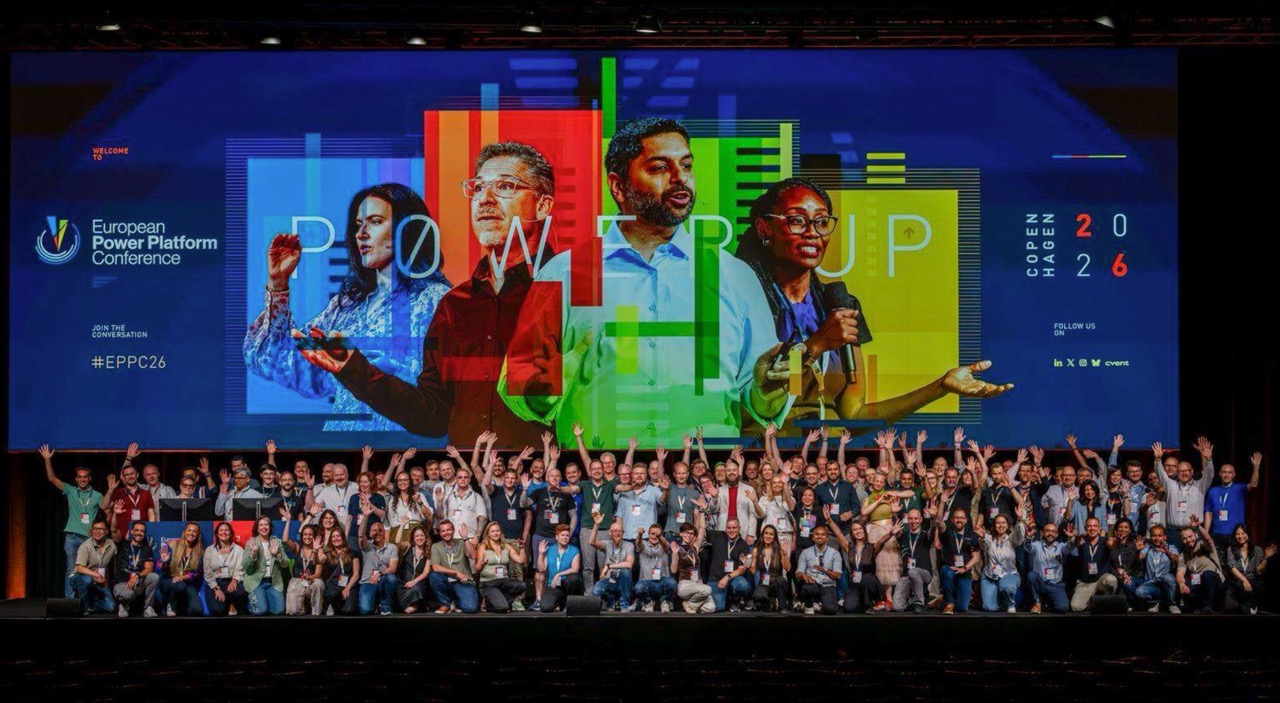
EPPC 2026 For us, it's exactly about that question. Not about separate features, but about design choices. And that is reflected in the three sessions that our colleagues provide. Three points of view, one common thread: AI only works if you let it land well in how people work.
From notification to action with Adaptive Cards and Copilot
Session by Elianne Burgers (Teamlead, Low Code & AI Solutions)
Automation should make your work easier. In practice, it often means more notifications, more clicks and more context switches. Everything works, but you're the one who has to keep it together.
In this session, Elianne shows how to design that bottleneck differently. With Adaptive Cards move your action to where the conversation is already taking place. In Teams and Outlook. No more static updates, but messages that you can do something with immediately.
With Copilot In addition, AI shifts from explaining to executing. The chat will not only be informative, but also action-oriented. In this way, automation becomes something that helps you again, instead of something that demands your attention.
Autonomy or Control? AI workflows you can trust
Session by Richard Wierenga (Tech Lead, Low Code & AI Solutions) & Albert-Jan Schot (CTO).
As soon as AI takes over more tasks, the next question inevitably arises. How much autonomy are you giving away. And where exactly do you want to keep a grip?
Richard and Albert-Jan make that dilemma tangible with a recognisable case: incoming emails. When do you leave a autonomous Copilot Agent classify and respond yourself? And when do you consciously choose a deterministic Power Automate flow, possibly enhanced with AI Builder and prompts?
What sets this session apart is that it doesn't sell a simple truth. It's about real preconditions: auditability, exceptions, speed, trust and human control. Exactly the topics that are also at the heart of Blis when we help organizations use AI responsibly. Working AI-first doesn't mean letting go of everything. It means making conscious choices.
Vibe coding, but without the hangover
Session by Albert-Jan Schot (CTO)
Vibe coding feels great. You have an idea, you're talking to an AI, and there's something. Sometimes within minutes. No long design phase, no extensive setup. Just build. It works. Which is exactly why it's so tempting.
But those who do this for a while will also notice the downside. Where does this logic come from? Why was it built like this? What happens if this soon has to scale, be integrated or maintained by someone other than yourself?
In this session, Albert-Jan zooms in on where vibecoding meets its limits. Not to slow it down, but to take it seriously. You see how fusion development helps to maintain that speed without losing the overview. AI is helping to build. People remain responsible for structure, choices and consequences.
The key question of this session is simple: when do you let yourself be carried away by the vibe, and when should you consciously intervene? Because vibecoding is powerful. But only if you know where to stop.
One story, no loose tricks
On paper, it looks like three different sessions. In practice, they tell one story. About AI that is not only smart, but also useful. About automation that helps people instead of burdening them. And about building with speed and responsibility. Of course, based on our practical experiences of more than a year of working AI-first.
That's why EPPC is such an important moment for us. Not to show what's possible, but to share what works. And to learn for yourself from people who are struggling with the same issues.
Watch the EPPC website for the full program.
And if you're there: chances are we'll meet there. Then let's continue talking.
FAQ
Frequently asked questions
We'd be happy to answer those right away. If your question isn't listed, please feel free to contact us.